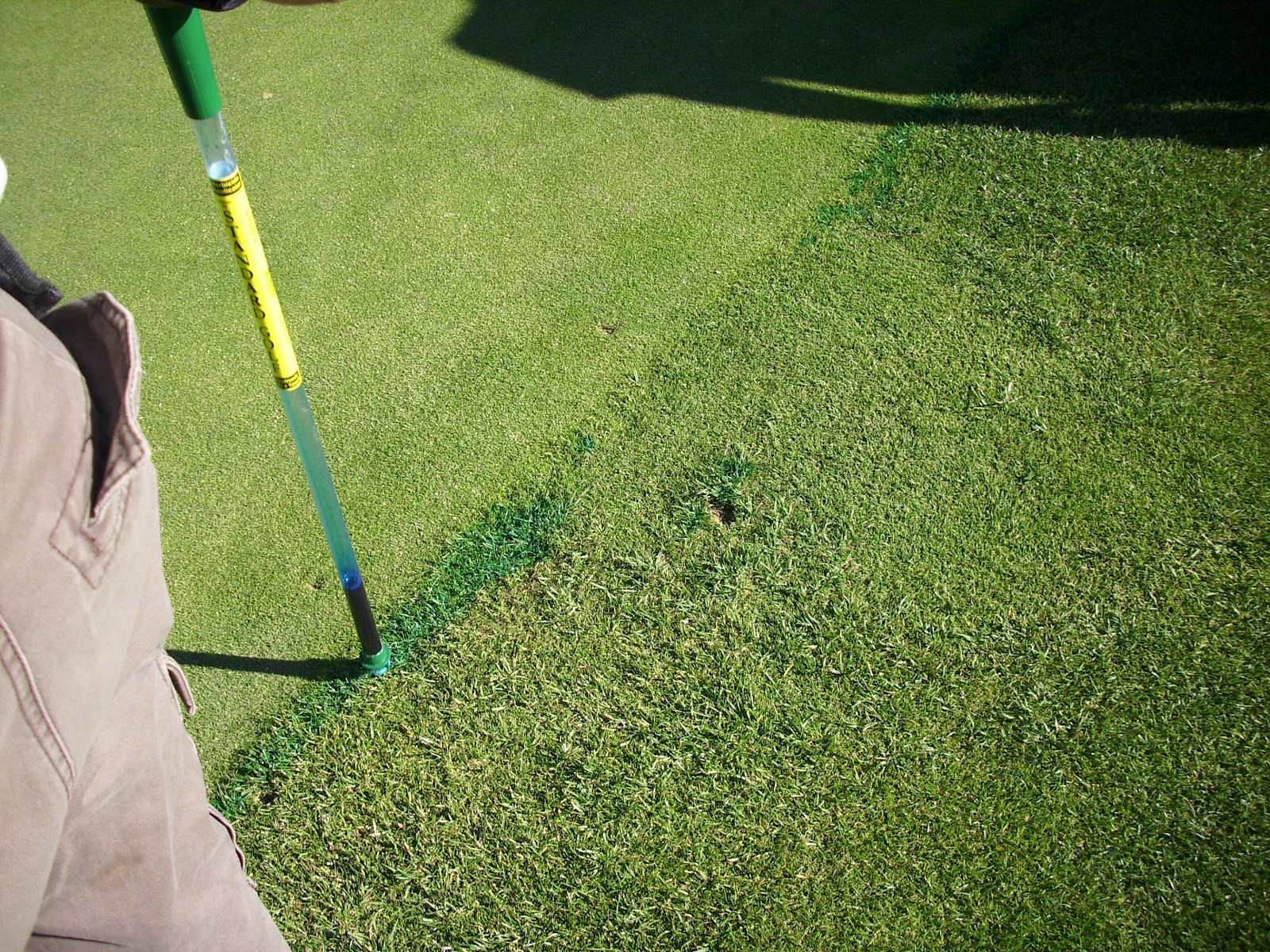
I am an early morning golfer and have never fully understood the justification for frost delays?
Frost is essentially frozen dew. Ice crystals visible on the outside of the plant can also form on the inside of grass blades. The grass plant, normally resilient to footsteps or cart traffic, becomes brittle and fragile when ice crystals form. Under the pressure of traffic, ice crystals puncture living plant tissues and rupture plant cells. Damage will not appear right away, but it will show up in footsteps and tire tracks the following days as the plant is unable to repair itself and begins to die. Frost damage can occur on any turfgrass mowed at any height, but it is amplified when the plant is mowed low, as on a putting green .
Keep in mind, a foursome typically takes several hundred footsteps on each green, so even allowing just a few groups to play when frost is present can be very damaging to the greens, and the rest of the golf course for that matter. It is not completely understood when frost will cause damage, so the decision to keep traffic off the golf course must be made conservatively to protect the condition of the course. For this reason, golf facilities are wise to delay starting times in the morning until frost has completely melted.
normally resilient to footsteps or cart traffic, becomes brittle and fragile when ice crystals form. Under the pressure of traffic, ice crystals puncture living plant tissues and rupture plant cells. Damage will not appear right away, but it will show up in footsteps and tire tracks the following days as the plant is unable to repair itself and begins to die. Frost damage can occur on any turfgrass mowed at any height, but it is amplified when the plant is mowed low, as on a putting green .